
Major and minor scales positions chart for alto trombone
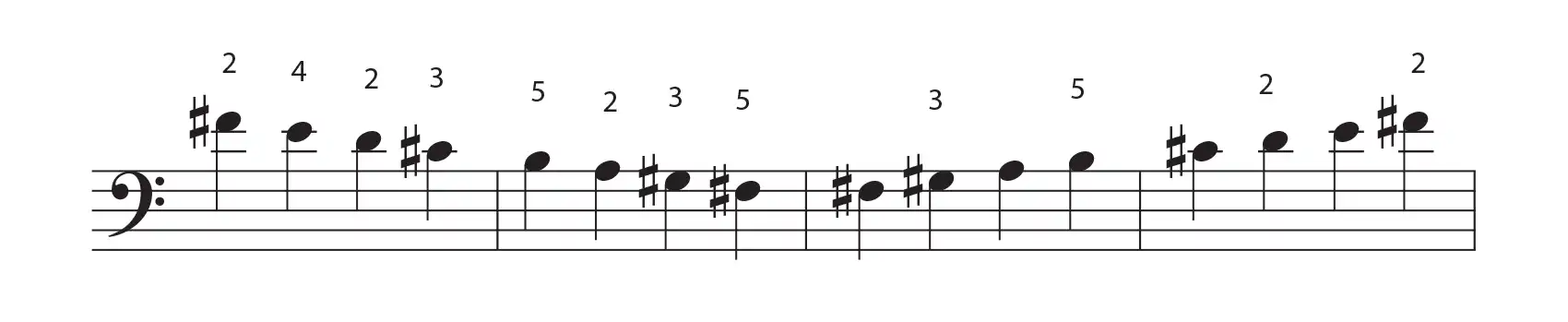
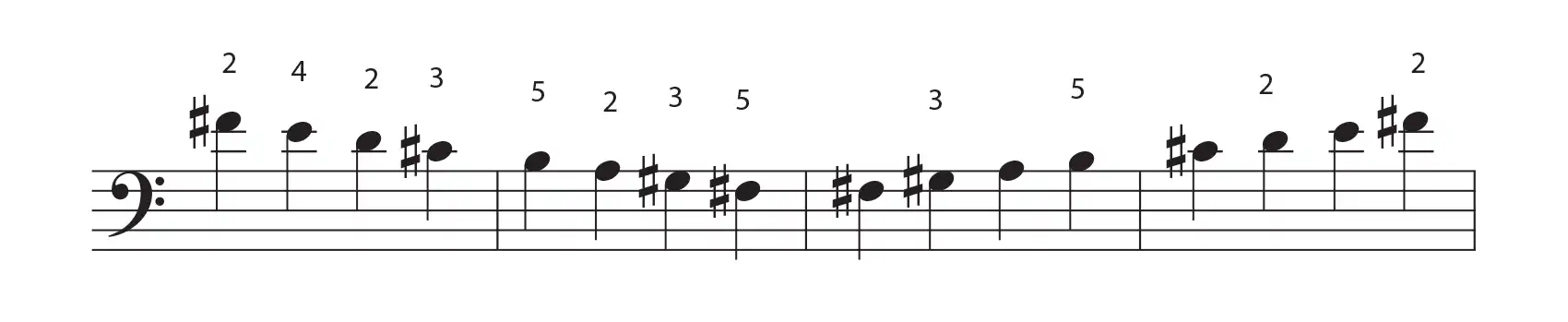
The following illustrates the 12 major scales descending by fifths along with their relative natural minor scale. The alto trombone positions are labeled for each. I’ve done a few things different than the typical scale chart.
- The scales start from the top note down, then back up. That’s counter-intuitive from the common practice of always starting from the low note up. But I think that’s one reason players typically have a harder time playing descending chord arpeggiations and scales. Notice if you have this challenge yourself.
- Since I created this chart to teach you the alto positions rather than give you a crutch, I have purposefully only given you every other position as you go back up the scale. This will help you start to remember the positions (or better yet, hear them!)
- Related to that last point, I’ve included an audio track with the major and minor harmony for each key. Learning the positions should be done by ear as much as, if not more than, eye and memorization. Notice also that the audio is rich in overtones to immerse you more deeply into the sound of that harmony. Start by playing the scales slowly in order to hear the locked-in intonation of each note.
For fun, try playing a major scale over a different major (or minor) track to hear the relationship of notes to various harmonies.
For example, play the C major scale over the F major audio track and listen for the sound of B natural over the F major harmony. Or play the E minor scale over the C major track and listen for the sound of the F#. This is how you develop your ear for harmony and scales.
C major scale
A minor scale

F major scale

D minor scale

Bb major scale

G minor scale

Eb major scale

C minor scale

Ab major scale

F minor scale
Db major scale

Bb minor scale

F# major scale

Eb minor scale

B major scale

Ab minor scale

E major scale

Db minor scale

A major scale

F# minor scale
D major scale

B minor scale

G major scale

E minor scale