Learning Library
Scales were never meant to be the source of musical expression.
Scales build technique. They don't tell your musical story.
Michael Lake · 12 min read
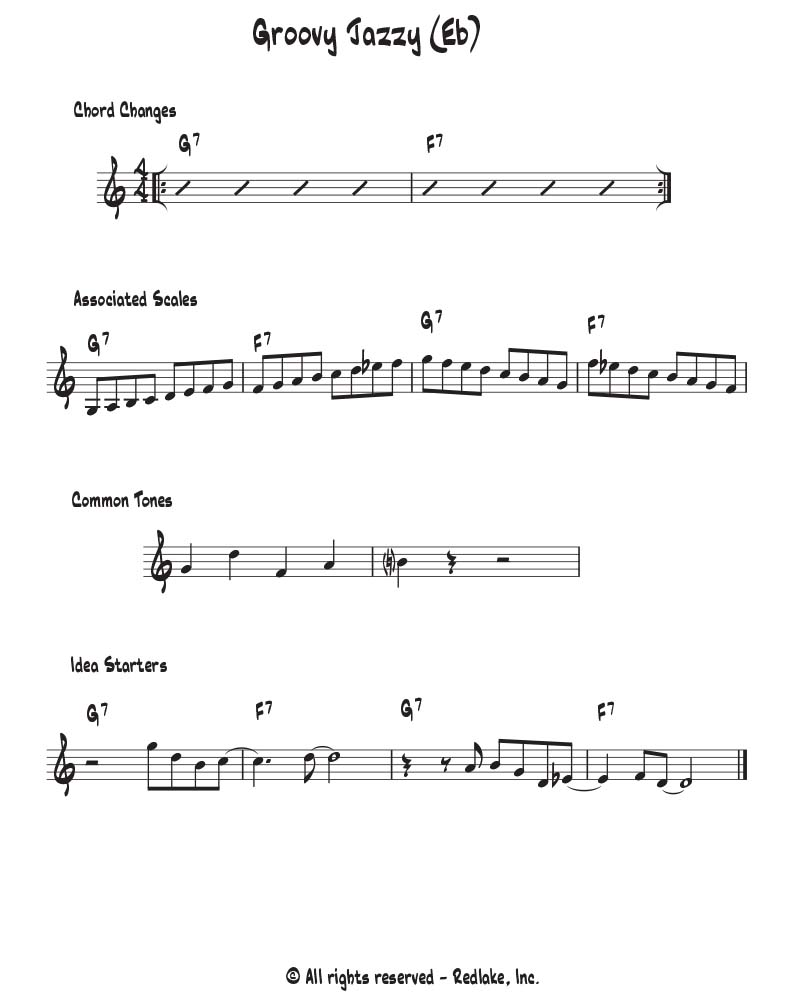
For generations, jazz students have been told that scales are the foundation of improvisation. So they practice major scales, melodic minor scales, diminished scales, whole-tone scales, bebop scales, altered scales, and every mode imaginable. The idea seems simple: the more scales you know, the better improviser you'll become.
But many players eventually discover a frustrating reality. They can play every scale their teacher assigned. They understand how scales relate to chord symbols. They know the theory. But when it's time to improvise, they're still not telling interesting musical stories. Instead, they sound like they're hunting for chord tones and running scales.
If you've ever wondered why this happens, the problem probably isn't your dedication. It isn't your talent. And it isn't because scales don't matter.
Scales can strengthen your fingers. They can't decide what you want to say through them.
Scales are one of the most valuable technical tools a musician can learn. They develop familiarity with your instrument, strengthen your technique, and help you hear one of the building blocks of music. Every serious musician should know them well.
The problem begins when we ask scales to do something they were never intended to do.
The Classroom Model
As jazz education evolved, teachers needed practical ways to explain improvisation in a classroom. Matching scales to chords provided a logical, organized system for helping students choose notes that would fit the harmony. It was teachable. It was repeatable. It helped students avoid obvious mistakes. There is a certain value in that approach.
But somewhere along the way, many students began to confuse the educational model with the creative process. Improvisation gradually became less about expressing musical ideas and more about selecting the correct notes. The goal quietly shifted from expressing oneself in music to finding the 'right' notes.
That's a profound difference.
What Great Improvisers Actually Do
Listen to the great improvisers. Miles Davis. John Coltrane. Sonny Rollins. Bill Evans. They weren't standing on stage mentally matching scales to every chord as the music flew by. They were listening, reacting, taking musical chances, and expressing musical ideas. Did they know scales? Of course they did. They had mastered every technical tool available to them. But when they improvised, those tools served the music. They weren't the music.
In fact, if you listen closely enough, you'll occasionally hear notes that weren't technically "correct." They weren't searching for perfection. They were pursuing an idea. Sometimes that meant creating tension. Sometimes it meant taking a risk. Sometimes it meant playing something that only made sense because of where the phrase was going.
Jazz and improvisation has never been about eliminating every wrong note.
It's about saying something worth hearing.
That's why so many students become frustrated after years of practicing scales. They have developed technical knowledge, but they can't tell interesting musical stories. Those are two very different skills.
Scales prepare your instrument.
They don't create your music.
If Scales Aren't Where Improvisation Begins, What Does?
It begins with an idea.
Every meaningful solo starts with something the musician wants to express. Before a note is played, there's a phrase, a rhythm, a sound, an emotion, or simply some musical intent. The fingers don't invent that idea. They enable it.
Every great improviser works this way.
Listen: Richie Beirach Explains Heart–Ear–Hand
This article introduces the idea that improvisation begins with a musical idea rather than a scale. In the audio below, jazz pianist Richie Beirach describes his Heart–Ear–Hand process in his own words, explaining how feeling becomes sound and how years of technical development allow the hands to express what the ear already hears.
Narrated by Michael Lake from the audiobook version of A Framework for Jazz Mastery. Approx. 10 minutes.
"What scale fits this chord?"
"What do I want to express?"
That's an entirely different objective.
Scales still matter. Technique still matters. Theory still matters. But they exist to support that connection between your musical imagination and your instrument. When your technical skills become second nature, they stop demanding your attention and begin serving your ideas. As Richie explains, his years of technical training allowed him to "completely forget about the piano" so he could articulate what he hears instead of merely running his fingers.
That's the distinction many students are never taught.
Scales become even more useful once they're no longer the goal. They become what they were always meant to be: a technical resource that supports musical expression.
Practice the Source, Not Just the Tools
If improvisation begins with a musical idea, then your practice should develop your ability to create musical ideas. It sounds obvious, but it represents a dramatic shift in how many jazz musicians practice and improvise.
Traditional practice often begins with the fingers. Learn another scale. Memorize another fingering. Drill another pattern. Play through a transcription. The hope is that music will emerge from enough accumulated technique. Sometimes it does. Often it doesn't.
Music begins somewhere else.
Before your fingers can play an idea, your ear has to recognize one. Before your ear can recognize one, your musical imagination has to begin creating one. That's why great improvisers spend a lifetime developing not only their technique, but also their listening, their phrasing, their rhythmic vocabulary, and their ability to hear music internally. That's a very different kind of practice.
Those questions move your attention away from selecting notes and toward making music.
Ironically, your scales become more valuable when they stop occupying the center of your attention. They become part of your technical vocabulary. They become the way your ideas reach your instrument, not the source of the ideas themselves.
That's the real goal: To develop the kind of technique that free your hands to express your musical ideas instead of requiring you to think about technique.
The hands are there to express what your musical imagination has already created.
Continue Your Journey
Next step
What Is Jazz Improvisation?
What improvisation actually is and why it has little to do with collecting more scales.
Read →See the bigger picture
Where Musical Ideas Come From
Where expressive musical ideas really begin—and why they don't come from memorized patterns.
Read →Put it into action
Connecting Ear to Instrument
Play the musical ideas you hear instead of relying on finger patterns you've memorized.
Read →Put It Into Practice
Moving beyond scales means developing musical ideas instead of memorizing patterns. These resources will help you build that way of thinking—and apply it in your own playing.
Improvisation Savvy
A practical approach to developing musical ideas, hearing phrases before you play them, and improvising with confidence.
Explore → Personal FeedbackThe Loft
Submit a recording of your improvisation and receive personalized feedback on your musical ideas, phrasing, creativity, and what to work on next.
Submit →