Learning Library
Are You Practicing with Intention?
Why effort without clarity keeps you busy without moving you forward.
Michael Lake · 15 min read
Most musicians practice with good intentions. They show up consistently, spend hours with their instrument, and work through scales, exercises, patterns, transcriptions, and songs. They're willing to put in the effort because they genuinely want to become better musicians. But many eventually reach a frustrating conclusion: despite all that time, their progress isn't keeping pace with their effort.
The problem usually isn't a lack of discipline. It's a lack of intention.
Intentional practice begins long before you decide what to practice. It begins by understanding why you're practicing something in the first place. Every exercise should move you toward a specific musical goal by addressing a specific obstacle that's standing in your way. Without that clarity, it's easy to stay busy without making meaningful progress.
That's why effective practice isn't measured by how long you practice or how many exercises you complete. It's measured by whether your practice is solving the right problem. We'll look ar what intentional practice really means, why so many musicians unknowingly practice symptoms instead of causes, and how approaching practice with greater purpose can dramatically improve both your progress and your enjoyment of making music.
Activity Is Not the Same as Progress
It's easy to believe that the more you practice, the more you'll improve. After all, hours spent with your instrument feel productive. You're working hard and you're committed to becoming a better musician. But activity and progress aren't the same thing.
Two musicians can spend the same amount of time practicing and achieve very different results. The difference often isn't talent or discipline. It's that one musician practices with intention, while the other simply repeats what they've always done.
Many musicians have heard the saying, "Practice makes perfect." It sounds encouraging, but it isn't entirely true. A more accurate statement is:
Practice doesn't make perfect. Practice makes permanent.
Every repetition strengthens a habit. If you're practicing with good mechanics, a clear musical goal, and focused attention, you're reinforcing skills that will serve you well. But if you're playing with poor time, unnecessary tension, sloppy articulation, or other ineffective practice habits, you're strengthening those as well. That's why simply practicing more isn't the answer.
Without intention, repetition can make the wrong things increasingly automatic. The habits you're building today become the habits you rely on tomorrow. Instead of asking, "What should I practice?" ask, "What am I trying to accomplish, and what is preventing me from getting there?" That shift in thinking transforms practice from repetition into problem solving.
Practice the Cause, Not the Symptom
One of the biggest mistakes musicians make is trying to fix what they notice instead of what caused it. Suppose you're struggling to play fast eighth notes. The obvious solution is to practice fast eighth notes. So you repeat scales, patterns, and exercises over and over, hoping speed will eventually come. But what if speed isn't the real problem?
Perhaps your time isn't solid enough to accurately place each note within the beat. Maybe your articulation slows you down. Perhaps unnecessary tension in your hands limits your technique. Or maybe you're simply trying to play faster than you can hear the music in your mind. The difficulty you notice is only the symptom. The real obstacle lies somewhere beneath the surface.
This is where intentional practice becomes so powerful. Instead of asking, "How can I play faster?" intentional musicians ask, "What's actually underlying my lack of speed?" Once you find the answer, everything changes. When you identify the root cause, your practice becomes focused, efficient, and purposeful. Instead of spending weeks reinforcing the symptom, you begin developing the underlying skill that allows the symptom to disappear naturally.
Learning to diagnose the real source of a musical problem is one of the most valuable practice skills you can develop. It's the difference between working harder and progressing faster.
Learn to Think Like Your Own Teacher
Every musician eventually reaches a point where simply following practice routines isn't enough. Progress depends on learning to observe yourself honestly, ask better questions, and discover what's actually preventing improvement. That's the heart of intentional practice.
Rather than assuming the first problem you notice is the real problem, intentional musicians learn to dig deeper. They break complex skills into their essential parts, test their assumptions, and look for the underlying cause. Sometimes the answer is exactly what they expected. Often it isn't.
The ability to diagnose problems accurately is one of the most valuable musical skills you can develop because you're the one person who's present for every practice session. A teacher may guide you once a week, but you're your own teacher every day. Learning to think this way changes practice from a routine into a process of discovery. Instead of repeating exercises and hoping for better results, you begin making deliberate decisions based on observation, understanding, and purpose.
Go Deeper: Finding the Root Cause
One of the lessons in Improvisation Savvy covers this idea in depth. Using examples from different instruments, I show how to look beyond the obvious symptom of a musical problem and identify what's actually causing it. Once you learn to think this way, you'll practice more efficiently—not because you're practicing harder, but because you're solving the right problems.
Musicians often believe that complexity is where improvement happens. More notes. Faster tempos. Harder tunes. In reality, improvement usually begins in the opposite direction—by stripping away complexity until you can clearly see what needs attention.
Put This Into Practice
Think about one aspect of your playing that has frustrated you for a while. Maybe your eighth notes never feel smooth. Perhaps your solos sound repetitive, your rhythm feels inconsistent, or you struggle to play by ear. Now resist the temptation to practice that problem. Instead, strip away the complexity.
Complexity has a way of hiding the real issue. The more things happening at once, the harder it becomes to see what's actually causing the problem. That's why intentional practice begins by simplifying. Try working through these four steps.
Identify the symptom
What is the result you're unhappy with? Be specific. "I'm not musical" isn't a symptom. "My solos always sound repetitive" is.
Strip away the complexity
Remove everything that isn't essential. If you think your time is weak, put the instrument down and simply clap or tap the rhythm. If you're struggling to play melodies by ear, remove the instrument entirely and try singing the melody. If your technique feels awkward, slow it down until you can clearly observe every movement. The goal isn't to make the exercise easier. It's to make the cause easier to see.
Test your assumptions
Ask yourself, "Is this really the problem?" Sometimes you'll discover that poor timing isn't the issue at all. Perhaps it's articulation. Perhaps it's tension. Perhaps it's that you don't yet hear the phrase clearly enough before you play it.
Practice the cause
Once you've identified the underlying skill, devote your attention to improving that—not the symptom. Then return to the original musical problem. You'll often find that the surface problem begins to disappear because you've strengthened the skill it depends on. That's intentional practice.
The Goal Isn't Better Practice
The point isn't to practice more. It's to practice with a purpose. It's about learning to think differently about your practicing. Intentional musicians don't simply work harder. They observe more carefully. They ask better questions. They strip away complexity until they understand what's really happening, and then they direct their effort toward what matters most.
The next time you find yourself stuck, resist the urge to simply do more. Pause. Simplify the problem. Look beneath the symptom. Find the cause. Then practice with intention.
Put It Into Practice
Practice in a Simpler Musical Environment
Groovz Playground
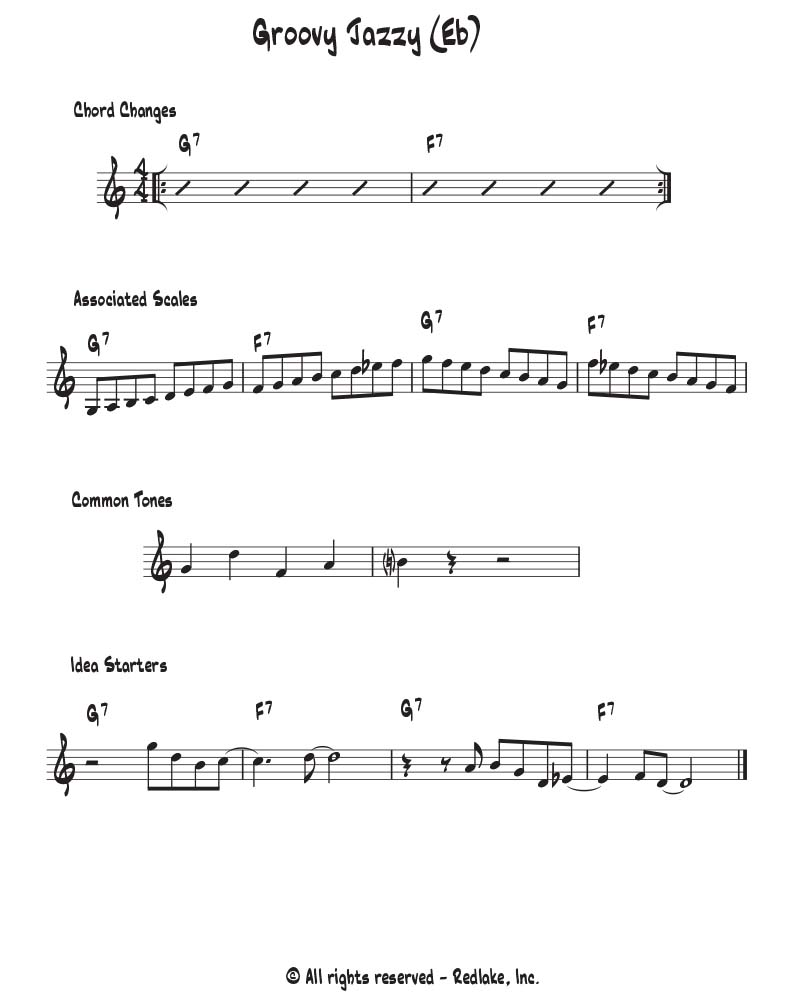
Groovz Playground was built around this same idea. Each groove intentionally removes harmonic complexity so you can focus on one musical idea at a time. By stripping away distractions, it's easier to hear what's really happening in your playing, identify the underlying skill that needs attention, and practice with greater intention.
Get an Outside Perspective
The Loft
One of the hardest parts of intentional practice is accurately diagnosing your own playing. We all have blind spots. In The Loft, you can submit a short recording, answer a couple of questions, and I'll personally evaluate your playing. Together we'll identify the underlying skills that deserve your attention so you can focus your practice where it will have the greatest impact.
Practice doesn't make perfect. Practice makes permanent. Make permanent the habits that help you become the musician you want to be.
Continue Your Journey
Next step
Practicing
Learn how to build practice sessions that produce lasting improvement instead of simply filling time.
Read →See the bigger picture
Where Musical Ideas Come From
Discover what you're really trying to develop every time you practice—and why musical ideas come before technique.
Read →Challenge your thinking
Why Scales Won't Teach You to Improvise
See why practicing technical exercises alone rarely leads to more musical improvisation.
Read →Put It Into Practice
Intentional practice means choosing the right priorities and evaluating your progress. These resources will help you do both.
Do More of What Matters Most
Learn practical strategies for focusing your time and energy on what matters most—including your musical growth.
Explore → Personal FeedbackThe Loft
Submit a recording of your playing and receive personalized feedback on your playing, your goals, and what to work on next.
Submit →