You don't need to become a great pianist. You need to hear like one.
Learn the essential jazz piano voicings that unlock hundreds of standards. Building your keyboard comping skills is one of the fastest ways to grow as a musician and improviser, no matter what instrument you play. The keyboard is the most visually intuitive instrument there is. Unlike the trumpet, sax, or trombone, it lets you construct, see, and truly hear the intricacy of jazz harmony.
This course isn't trying to turn you into a jazz pianist. It's giving you a practical, working command of the keyboard so that harmony stops being abstract and becomes something you can hear, understand, and use in your own playing.
Whether you have a 49-key MIDI keyboard, a Hammond B-3, a Steinway, or a set of vibes, you'll discover a simple approach to jazz comping that will deepen your understanding of harmony and improve your musicianship.
A 45-page ebook and a 20-minute video, working together.
The video is a companion to the ebook, meant to give you a more personal connection to the material. The ebook contains the written out two, three, and four note voicings, played in the right hand over a bass note in the left, along with the exercises that build and measure your comping fluency.
- Two, three, and four note voicings for major and minor progressions
- Voicings for the altered chords you'll run into most often
- Comping examples on Autumn Leaves, All The Things You Are, and Laura
- Every voicing written out in every key
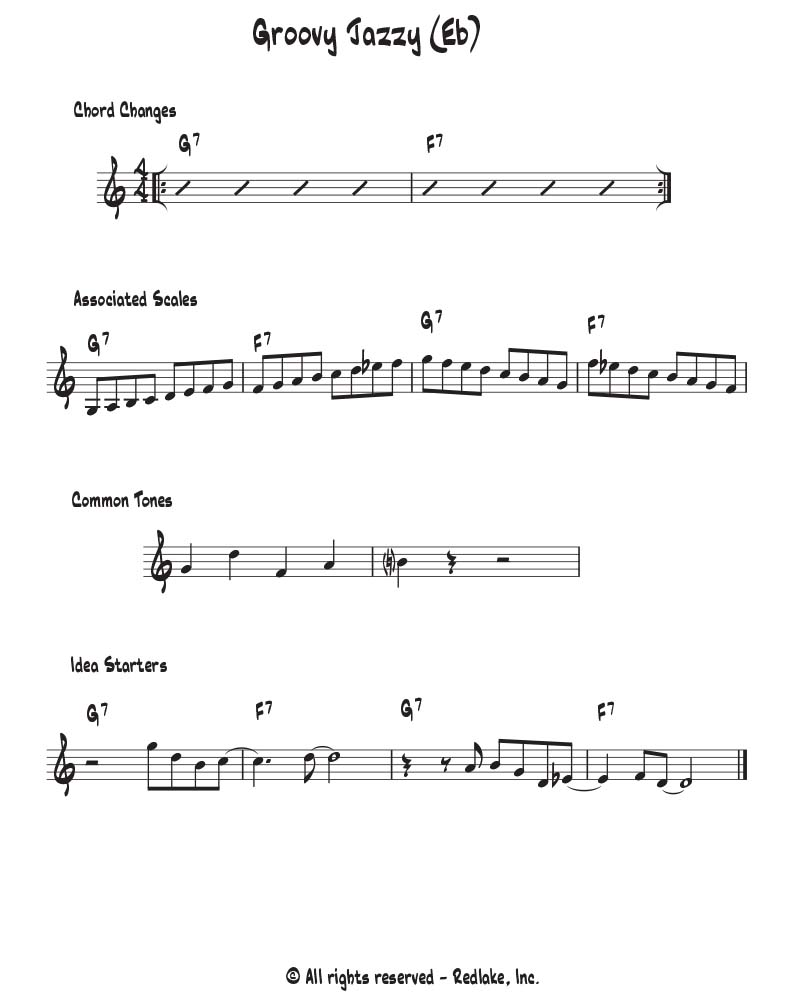
A page-by-page look at what you're getting.
The ebook and video move through the same material together, so you can read it, watch it, and play it at the same time.
-
Harmony and note choice A short primer on the harmony behind the voicings, useful even if you already trust your ear.
-
Major ii-V-I voicings Two, three, and four note voicings, laid out step by step over a major ii-V-I progression.
-
Minor ii-V-I voicings The same voicings adapted for a minor ii-V-I, so the minor side stops being the weak spot.
-
Altered chord voicings Three and four note shapes for the altered chords you'll actually run into.
-
Every voicing, written in every key Full voicings at the end of each section, to lean on as little as possible.
-
A 20 minute video walkthrough Comping demonstrated in real time on Autumn Leaves, All The Things You Are, and Laura.
-
Exercises for each section Practice drills that build and measure your own comping fluency as you go.
You know the changes. You don't yet hear them.
If you play a horn, you've spent years reading harmony without ever really seeing it. There's nothing wrong with your ear. It's just never had the right tool to develop.
- Reading a chord symbol and actually hearing what's inside it are two different skills.
- Horns don't give you the physical, visual layout that makes harmony easy to see and internalize.
- Without some working command of the keyboard, jazz harmony tends to stay theoretical instead of becoming something you can hear and use.
- The ceiling this puts on your improvising has nothing to do with your ideas. It has to do with your ears never getting the right kind of practice.
The keyboard fixes this faster than any other instrument can.
This isn't a piano method. It's a way to finally hear harmony.
This course is built around a basic command of the most visually intuitive instrument there is. It's not about technique for its own sake, and it's not about becoming a jazz pianist. It's about giving your ears a physical foundation to build on.
- It's not mainly a piano method, and it won't make you a jazz pianist.
- It's built around voicings you can construct, see, and hear, not just read.
- It uses two, three, and four note voicings as its foundation, not full theory deep dives.
- It's meant to help you hear more, so you become a better improviser on whatever instrument you actually play.
You'll hear changes instead of just reading them.
This course is meant to build real comping fluency, not just familiarity with a set of shapes.
-
Command two, three, and four note voicings So you can construct and hear jazz harmony, not just read it off a page.
-
Move confidently through major ii-V-I progressions Built from the voicings used throughout most of this course.
-
Handle minor ii-V-I progressions with the same ease So the minor side of the harmony stops being the weak spot.
-
Voice the altered chords you'll actually run into The most common alterations, in practical three and four note shapes.
-
Comp real changes on three standards Autumn Leaves, All The Things You Are, and Laura, then thousands more with the same knowledge.
-
Depend on your ear more than the page The written voicings are there in every key when you need them, so you can lean on them less over time.
The result isn't just better keyboard technique. It's better ears, wherever you take them.
Practical, from page one.
Pages four and five lay out the two, three, and four note voicings used throughout the course, first in a major ii-V-I, then in a minor ii-V-I. Page six covers the altered chords you'll run into most often, in three and four note variations. Every voicing is played in the right hand, over a bass note in the left, and demonstrated on Autumn Leaves, All The Things You Are, and Laura. If you already have the skills to dive straight into four note voicings, focus on the last part of the video and its exercises. The earlier material still has helpful notes on harmony and note choice worth going back to.
Voicings for every situation
Major and minor ii-V-I progressions plus the four most common altered chords, each broken into two, three, and four note shapes.
Written out in every key
Every voicing is written out in full at the end of each section. Use it as little as you can and let your ear do the work instead.
Works on any keyboard
A 49 key MIDI controller, a Hammond B-3, a Steinway, or vibes. What matters is the layout, not the instrument.
This isn't primarily a book on theory. For that, Mike recommends The Jazz Harmony Book by David Berkman and The Berklee Book of Jazz Harmony by Joe Mulholland and Tom Hojnacki. This course is built to get you comping and hearing harmony quickly, with a few honest simplifications along the way.

Give your ears the tool every other instrument is missing.
If you want to hear more of what's happening in the harmony you're already playing over, this course will get you there. Build a working command of comping, and you'll be a better improviser and musician for it.