Softcover · PDF · Audiobook · Kindle
Most jazz education teaches you what to play. This book teaches you how to think about what to play.
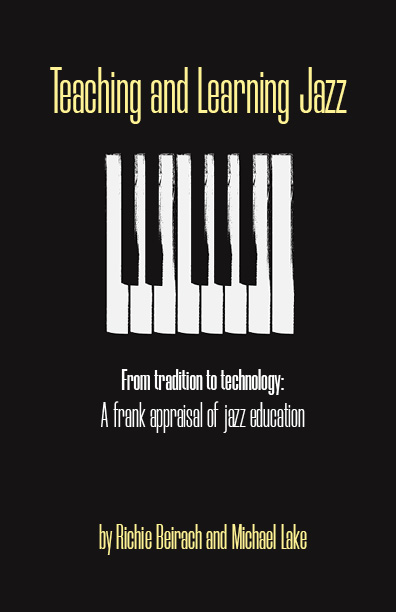
Teaching and Learning Jazz
Are you a jazz teacher looking to profoundly impact your students? Or a student seeking to truly master jazz? This is the book Richie Beirach and I most wanted to write, and the one we were most proud of.
"Teaching and Learning Jazz is the most important book on Jazz Education I have ever read and possibly ever written!"

Justin DiCioccio
Associate Dean/Chair Emeritus · Jazz Arts · Manhattan School of Music
Inside the Book
What You'll Discover
Lessons from Jazz Masters
Personal stories and insights from legends like Stan Getz, Chet Baker, Jack DeJohnette, Sonny Stitt, and George Coleman. Wisdom passed down through the master-apprentice tradition.
The Art of Teaching Jazz
The critical skills every jazz educator needs to inspire and transform their students, including what can and cannot be taught, and how to choose the right teacher or school.
Effective Jazz Learning Techniques
Proven strategies for students to rapidly advance their improvisational skills, musical understanding, and artistic expression, whether in school or out.
Navigating Jazz Education
An honest evaluation of jazz schools, online learning, and technology-driven methods with clear, opinionated guidance on choosing the right path for your needs.
Real Conversations, Real Growth
Thought-provoking dialogues between Richie Beirach and Michael Lake exploring diverse and sometimes opposing viewpoints to challenge and deepen your understanding of jazz education.
A Lesson in Jazz Interaction
A detailed analysis of Richie's early 1980s trio recording of Nardis. A blow-by-blow account of how three musicians craft something together in real time.
From the Pages
Lessons from the Masters
The book opens with six unforgettable lessons Richie received directly from the giants of jazz. Here are three of them.
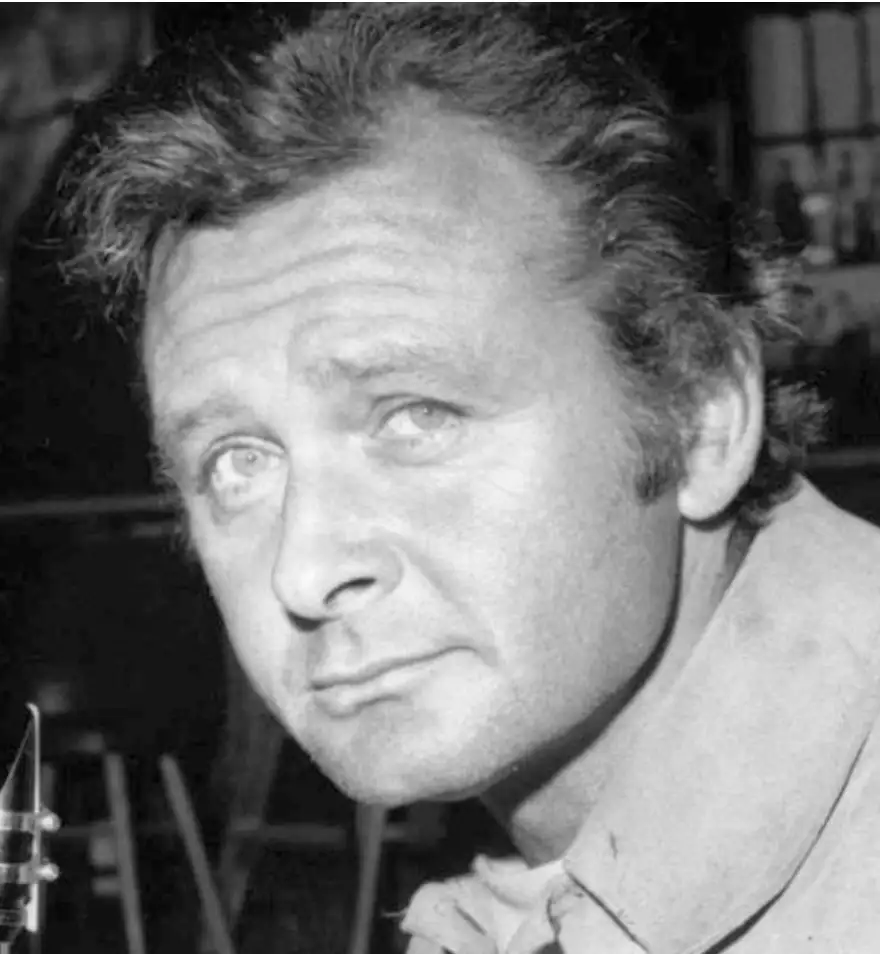
Stan Getz · Toronto, 1972
"Kid, that melody is the best chorus! Why would you want to fuck around trying to improve on Billy Strayhorn's great melody?"
Richie's first gig with Stan Getz and a lesson about when not to improvise that changed his understanding of jazz composition forever.

Chet Baker · Washington DC, 1978
"Because now you will never forget it. You will never forget to think about your dynamics when playing a soft ballad."
Chet stopped the performance mid-song to correct Richie's dynamics in front of a packed house and the press. The lesson that stuck for life.
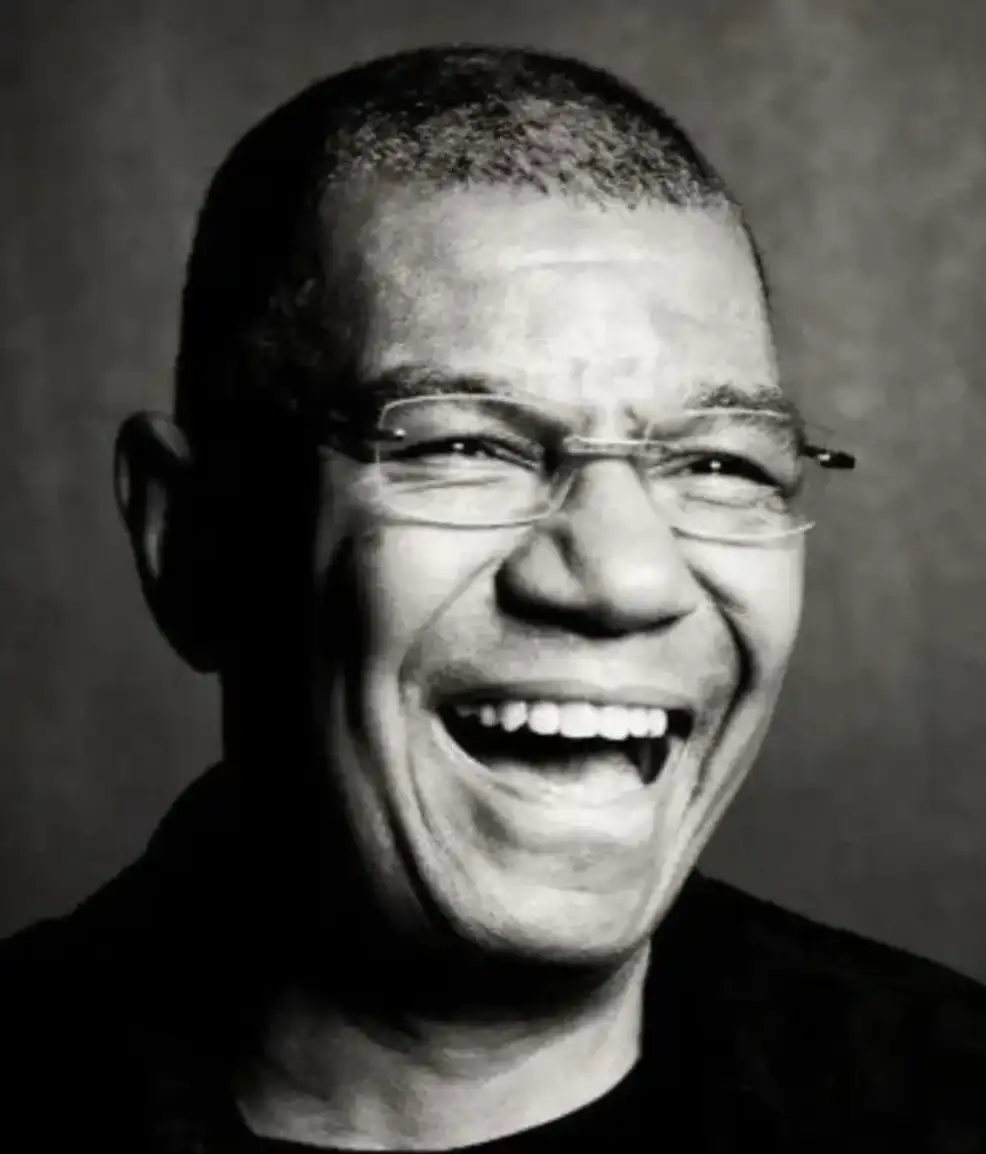
Jack DeJohnette · Toronto, 1972
"Don't listen to me for the time. Even I can't listen to me! You have good time, so trust yourself."
Jack and Dave Holland knocked on Richie's hotel room door after the gig. What they said next changed how he played with every drummer after that.

Manfred Eicher · Stuttgart, 1977
"Play a phrase, leave space, repeat the phrase, develop it. Don't let the piano play you."
Recording his solo ECM album Hubris at age 30, Richie thought he was ready. Manfred Eicher's blunt response in the control room taught him what he'd been missing.
Watch Richie
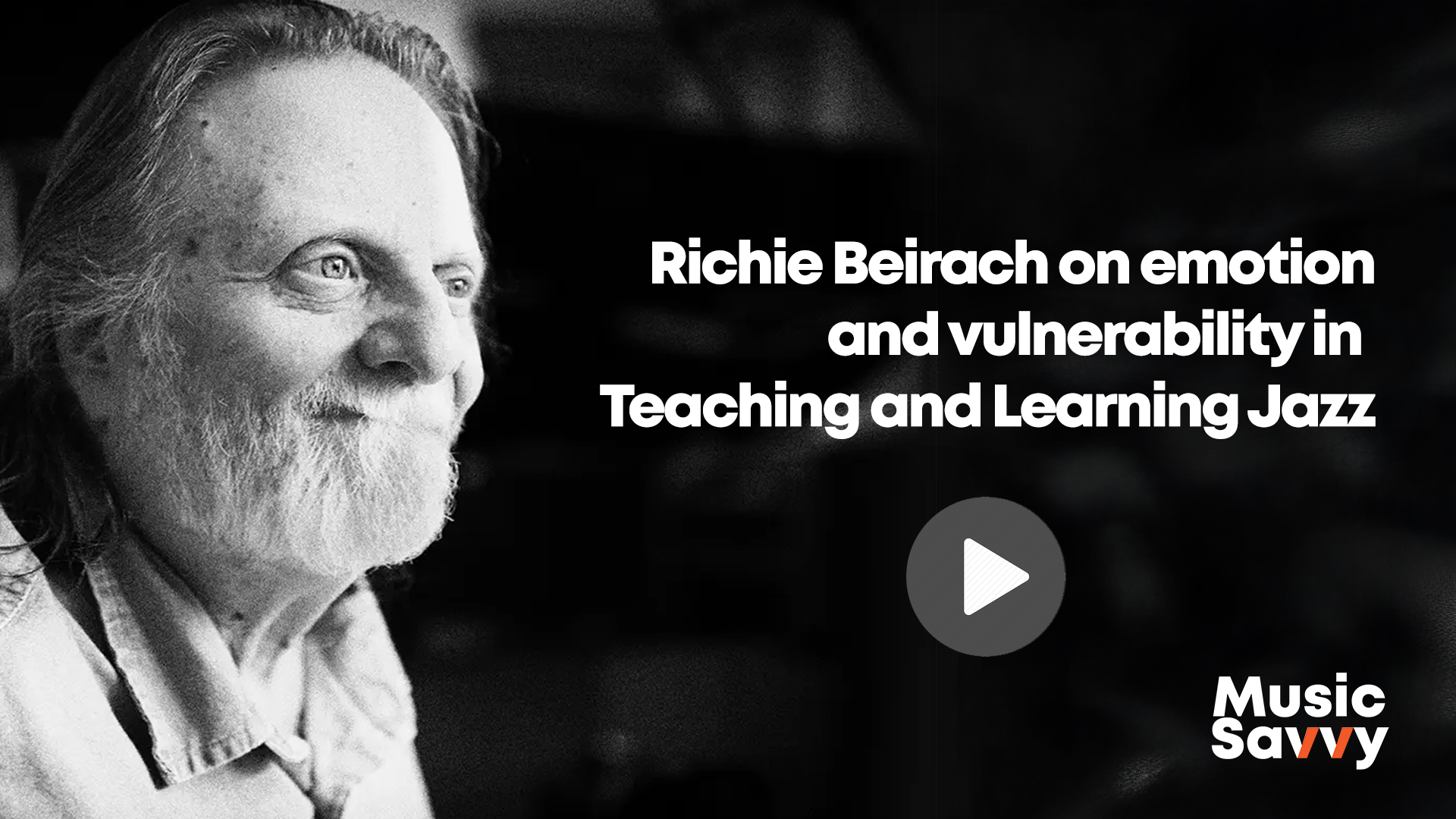
Richie on emotion and vulnerability in Teaching and Learning Jazz
Watch this candid conversation between Richie and Michael on vulnerability in playing jazz and how that relates to this book.
The emotional truth behind great jazz teaching.
Richie talks about why vulnerability — in students and teachers — is not a weakness but the gateway to real musical growth.
This conversation captures exactly the spirit that makes Teaching and Learning Jazz different from any other book on the subject.
A direct window into how this book was made.
Why This Book Matters
Teaching and Learning Jazz bridges the gap between tradition and real-world musicianship.
Both students and teachers will find something here that most jazz education books completely miss.
Inspiration that lasts. Practical wisdom from jazz legends to inspire sustained growth — not abstract theory, but stories from the bandstand.
Clarity and direction. Strategies to identify and overcome the common obstacles faced by both students and teachers in jazz education.
Real-world relevance. Insight from successful professional musicians — helping readers navigate the complexities of modern jazz education with clear eyes.
Authentic artistic development. Encouragement and methods for cultivating your personal musical voice — not copying others, but finding what only you can say.
This is more than just a jazz education book. It's your guide to unlocking genuine musical potential.
Experience Richie's Teaching Style
Two short videos. Two essential concepts.
Discover firsthand why Richie Beirach is celebrated as a profound jazz educator. These short videos touch on two essential concepts from Teaching and Learning Jazz.
Essential Concept
Inner Listening — How to tune into your internal musical voice to unlock mastery
Essential Concept
Feeling Time — Mastering rhythm and time to bring jazz feel to your improvisation
What the Masters Say
Praise for Teaching and Learning Jazz
Teaching and Learning Jazz is the most important book on Jazz Education I have ever read and possibly ever written!
Justin DiCioccio
Associate Dean/Chair Emeritus, Jazz Arts · Manhattan School of Music
This ingenious book, by Richie Beirach and Michael Lake, goes beyond what is found typically in most jazz education "how to" books. The authors offer practical and crucial advice for jazz students based on their real-world experience as students of the music, during their performance careers, and as teachers of this art form.
Rich DeRosa
Associate Director, Jazz Composition & Arranging · University of North Texas
Get the Book
Choose Your Preferred Format
Available in multiple formats to match your reading style.
Softcover Book
Highlight, bookmark, and keep it close at hand.
$29.95PDF Edition
Instant digital download for tablets and computers.
$19.95Audiobook
Listen anytime, anywhere.
$9.95 Buy Audiobook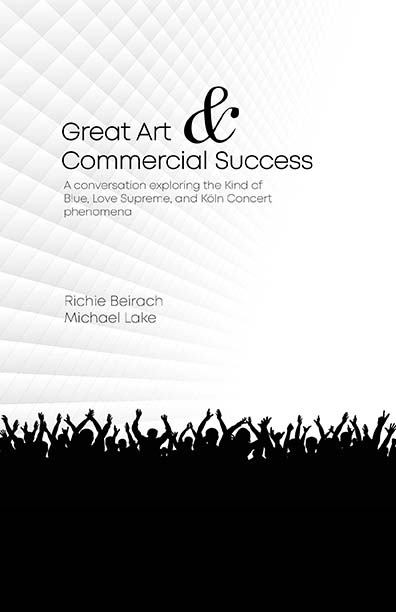
Free ebook of Richie's Great Art & Commercial Success with your purchase of audiobook.
Read It Risk-Free
If Teaching and Learning Jazz doesn't change the way you think about jazz education, whether you're a student, a teacher, or simply a passionate listener, contact us for a full refund. No questions asked.
And you keep the book.
Questions you might be asking yourself.
Both. And that's deliberate. Students will find guidance on choosing the right teacher and school, practical learning strategies, and insight into what the masters actually taught. Teachers will find a rigorous examination of what can and cannot be taught, what makes a great jazz educator, and how to pass on the tradition authentically. The book is organized so each audience gets what they need.
No — and that's what makes the book valuable. They agree on the fundamentals of what jazz is and how it should be taught, but they have genuine disagreements on topics like online education, technology, and what players today are missing. There's a full chapter formatted as a live, unedited debate between them. Reading both sides gives you more than any single perspective could.
He's blunt about it. In his view, most online jazz instruction is provided by incompetent musicians or people with a self-promotional agenda who think they know more than they do. The book doesn't shy away from this opinion — but it also offers a balanced chapter on what online resources do have value, and how to tell the difference.
The book is written for anyone with a serious interest in jazz — from players just beginning to explore the music to experienced professionals reassessing their approach. The master-apprentice stories are accessible to anyone. The more technical discussions assume some familiarity with jazz but don't require advanced theory knowledge.
If the book doesn't exceed your expectations, contact us for a full refund — no questions asked. You keep the book regardless.
Jazz isn't a collection of patterns.
It's a story. This book shows you how to tell yours.
Teaching and Learning Jazz gives you the knowledge, the perspective, and the inspiration to become the musician — or the educator — you've always wanted to be.
From $9.99 · Softcover · PDF · Audiobook · Kindle · Risk-free guarantee